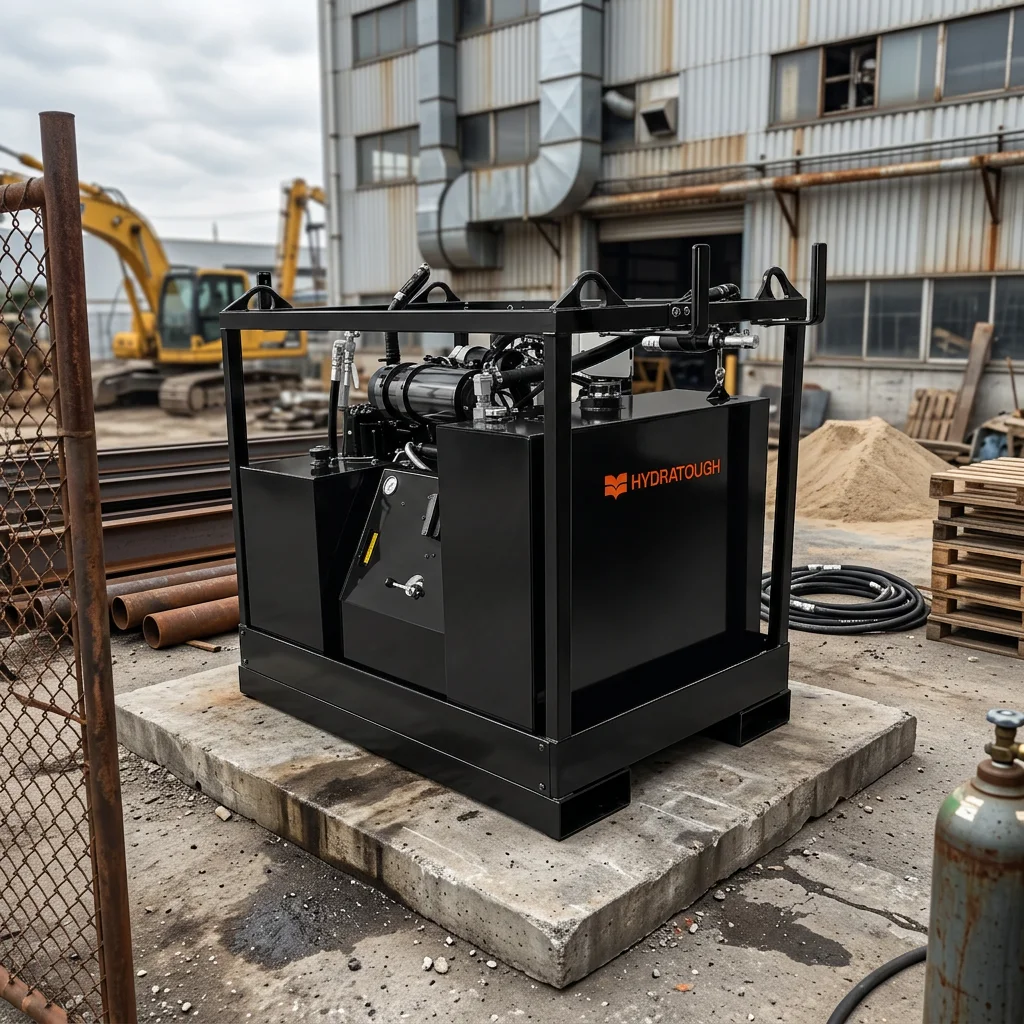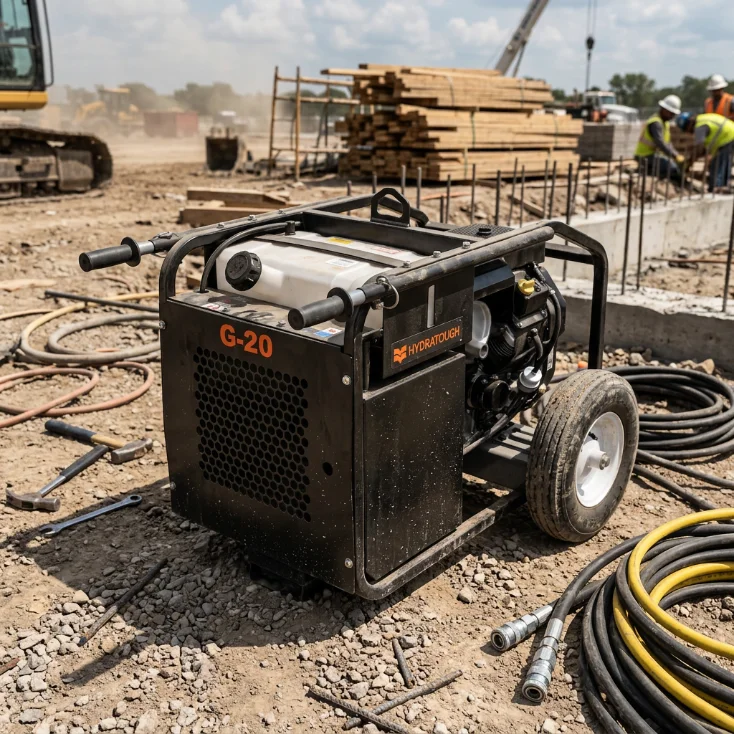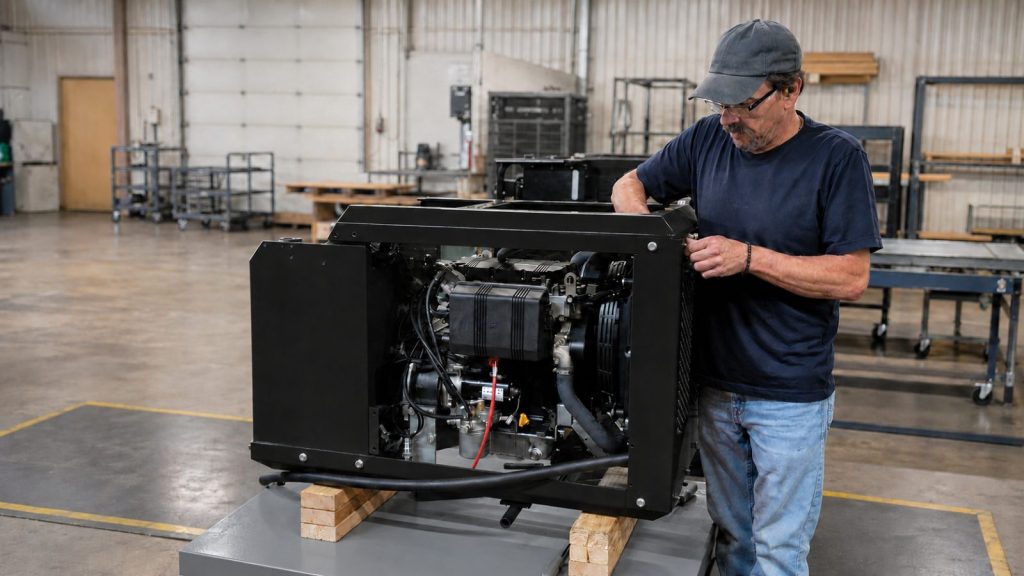
How to size a hydraulic power unit comes down to matching the unit’s flow rate and working pressure to the tools you plan to use. Horsepower sets the limit for what your unit can deliver, while flow and pressure determine whether your tools will perform correctly. From there, it’s a matter of working through your fuel type, flow configuration, frame type and coupler compatibility to complete your spec: a simple process we’re exploring in this learning resource.
If you’re researching how to spec a hydraulic power unit, you may begin by comparing horsepower between models. However, this guide explains why flow and pressure warrant equal attention. We’ll also be looking at correct sizing guidance, how to match your pump to your engine or motor and common sizing errors to look out for.
Why Portable Hydraulic Power Unit Sizing is Crucial
Getting your sizing wrong can cause significant issues as you go about your tasks. A unit with too little flow will run your tool slowly, while a unit that can’t meet your tool’s pressure requirement will leave it stalling under load. In the other direction, a unit with too much flow risks damaging tools rated for a lower input. Knowing how to size a hydraulic power pack can avoid these outcomes and the downtime that comes with them.
Three Numbers That Determine Sizing: GPM, PSI and HP
Three ratings define what your portable hydraulic power unit can do.
- Flow rate: Measured in GPM, flow rate sets the speed at which your tool operates. Match it to your tool’s rated flow. Too little flow will run your tool sluggishly, while too much flow risks damaging a tool rated for a lower input.
- Working pressure: Measured in PSI, working pressure sets the force available. If the unit cannot meet your tool’s pressure requirement, the tool will stall under load, and the heat that builds up as a result can damage it over time.
- Horsepower: This figure sets the ceiling for the flow rate and working pressure. Horsepower can deliver high flow at lower pressure, or lower flow at higher pressure, but not unlimited amounts of both.
Flow and pressure are the two numbers your tools actually run on: pressure determines the force available, flow determines how fast the tool moves. Horsepower isn’t a third independent spec you shop against, but the limit on what those two can reach together. In practical terms, hydraulic horsepower is calculated as pressure in PSI multiplied by flow in GPM, divided by 1,714.
Let’s take a look at how these ratings can be applied across two of our own units. Our 23 HP D-23S24-C4-O delivers 24 GPM at 1,000 PSI for high flow, lower pressure work. The D-23S12-J4-W, also rated at 23 HP, delivers 12 GPM at 1,800 PSI for higher pressure applications. Same horsepower, very different capabilities, which is exactly why flow and pressure are the numbers to start from. Identify what your tool requires, then confirm the unit’s horsepower can support it.
How to Spec a Hydraulic Power Unit Step by Step
Once you understand flow, pressure and horsepower, specifying a unit becomes a simple five-step process. Each step narrows the field, starting with the tool you need to run and ending with the couplers that connect it.
Step 1: Identify Your Tool’s Flow & Pressure Requirements
As a starting point, check your tool’s data plate or manual for its rated GPM and PSI. This is the baseline every other decision works from, and where sizing starts for most buyers.
Step 2: Choose a Fuel Type
Once you’ve identified your tool’s flow and pressure requirements, you can move on to selecting the engine or motor that will drive the unit.
- Gas engines are lighter, lower cost and easy to move, and suit construction and general site tooling.
- Diesel engines offer more torque and better endurance for continuous or remote work, and are preferred for boring, pipeline, marine and oilfield applications.
- Electric motors run clean and quiet with no exhaust, making them the right choice for indoor, enclosed, telecoms and utility environments.
If you’re unsure what fuel type applies to your work, don’t leave it to guesswork: simply reach out to a specialist at HydraTough who’ll be happy to help.
Step 3: Choose a Flow Configuration
As a next step, you should move onto choosing your flow configuration. Here, you’ll have three options: variable flow, fixed flow and dual flow.
- Variable flow units adjust output from zero up to the rated GPM, useful where a crew runs varied tools.
- Fixed flow units deliver a set GPM every time, useful where the tool’s flow requirement is constant.
- Dual flow units run two independent circuits that operate separately or combine for higher single output, and are ideal for running two tools at once.
Step 4: Choose a Frame Type
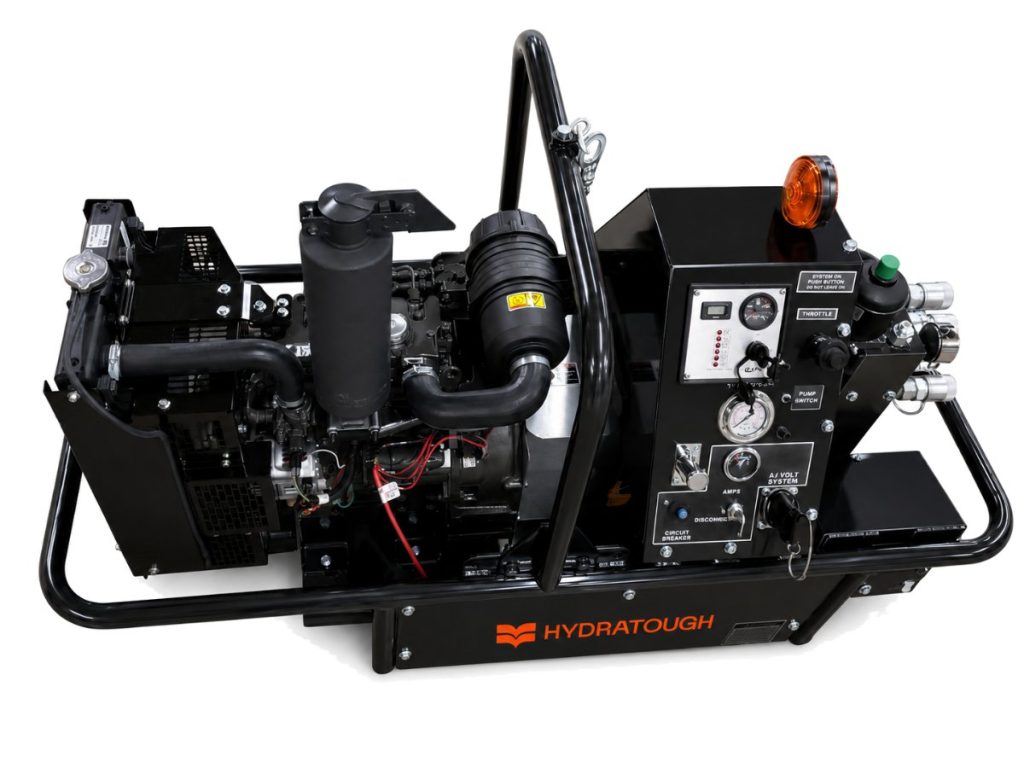
Next, decide on your frame options between a wheeled unit or a skid unit. Wheeled units move easily around a site and suit crews who reposition the unit often. Skid units are stable and lifted into place by crane or forklift, suited to stationary, heavy, high flow or vessel-based installations.
Step 5: Confirm Coupler Compatibility
Finally, you can move onto confirming coupler compatibility. HydraTough units use 3/8 inch HTMA flat faced quick couplers to the ISO 16028 standard, which is widely compatible with hydraulic tooling across the trades. Your unit can ship without couplers or with couplers specified by you, so confirm what your tools need before ordering.
What Size Hydraulic Pump Do I Need? Matching a Pump to Your Engine or Motor
Behind this five-step process sits one engineering relationship: pump displacement and prime mover speed set your unit’s flow, while available torque and the pump’s pressure rating set how much pressure that flow can be delivered against.
On any of our standard units, that pairing is already engineered in. Each pump displacement is matched to its engine/motor speed and torque to hit the flow and pressure shown on the specsheet.
If you’re speccing for a custom or OEM build, you can apply that same logic directly: confirm your tool’s flow and pressure requirement, then check that a pump and prime mover combination covers it without running at the extremes of their rated range. On a standard HydraTough unit, that work’s already done.
Sizing Examples Across the HydraTough Range
The table below shows how these principles play out across a few representative units, a useful starting point if you’re looking for a unit for a specific job. The full range, including diesel and skid mounted units for heavier work, is available to browse by spec.
| Unit | Fuel | Typical use | Flow | Working pressure |
|---|---|---|---|---|
| G-05S05-08-O | Gas | Light tooling, smaller operations | 5 GPM | 1,800 PSI |
| G-18S10-64-W | Gas | Jackhammers and breakers (construction) | 0 to 10 GPM, variable | 2,000 PSI |
| D-23S12-J4-W | Diesel | Boring, pipeline, marine, oilfield | 12 GPM, fixed | 1,800 PSI |
| E-15S10-G6-W | Electric | Indoor, enclosed, telecoms, utilities | 10 GPM | 2,000 PSI |
Common Sizing Mistakes to Avoid
Knowing how to select a hydraulic power pack is simple. However, many of our customers come to us having experienced these sizing errors in the past. Be sure to watch out for them:
- Shopping on horsepower alone: Two units with the same HP can have very different flow and pressure ratings.
- Ignoring the pressure requirement: Flow often gets the most attention. A tool starved of pressure will still stall under load, even with plenty of flow available.
- Undersizing the reservoir for the duty cycle: Continuous or heavy duty work needs a reservoir large enough to support sustained operation without overheating the fluid.
- Overlooking coupler compatibility: A unit that’s otherwise correctly sized is still the wrong choice if it can’t connect to your tools.
- Oversizing on flow: Pushing more flow through a tool than it’s rated for risks over-speeding it, which drives heat and premature wear.
Frequently Asked Questions
What size hydraulic pump do I need for my tool?
Check your tool’s rated flow and pressure on its data plate, then choose a unit whose pump can deliver both without running at the top of its range. Horsepower sets the ceiling, while flow and pressure determine fit. For more guidance on how to size a hydraulic pump, contact us.
How do I know what GPM and PSI I need?
Your tool manufacturer publishes rated flow and pressure for every hydraulic tool, usually in the manual or on a data plate. Match your unit to those published figures for an accurate fit.
Is it okay to use a bigger unit than my tool requires?
It depends on the tool. Too much flow can push more fluid through a tool than it’s rated for, which risks damage over time. Oversizing on pressure carries less risk, since a tool only draws the pressure the load demands, but it still pays to check your tool’s maximum rating. The safest approach is always to match the unit to the tool’s actual rating.
What’s the difference between variable and fixed flow when sizing a unit?
Variable flow units let you adjust output up to a rated maximum, which suits crews running different tools with different requirements. Fixed flow units deliver one consistent GPM, which suits crews running the same tool and who value predictable output.
Should I match horsepower, or just flow and pressure?
Flow and pressure are what determine whether a tool runs correctly. Horsepower matters because it sets the ceiling those two numbers can reach together. Flow and pressure remain the numbers to shop on first.
Buying From HydraTough Is Easy
Once your numbers are confirmed, buying from HydraTough is simple. Specs and pricing are shown up front, with no quote to wait on. Browse the full range to find a match, or reach out to a HydraTough specialist for help confirming your spec.